
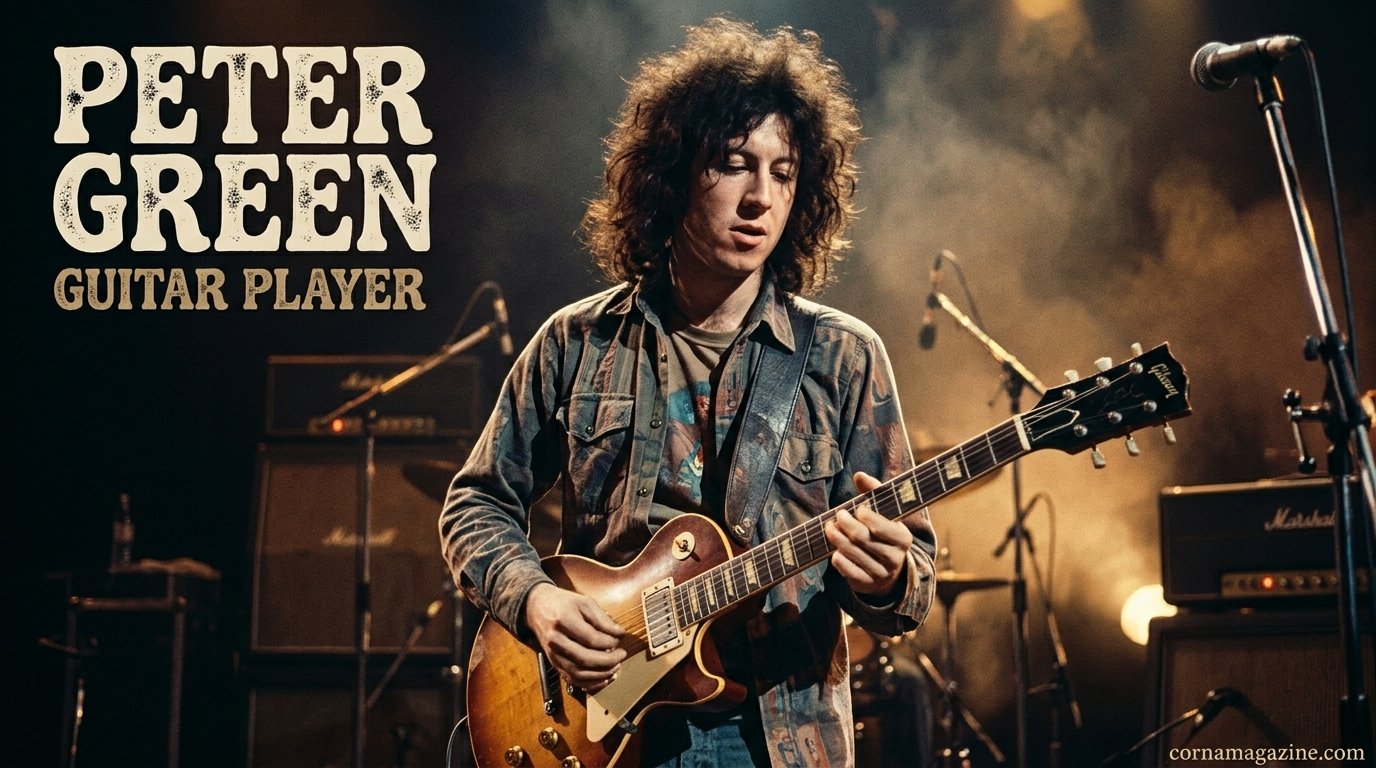
Peter Green stands as one of the most distinctive and emotionally resonant guitarists to emerge from the 1960s British blues scene. Best known as the founder and original leader of Fleetwood Mac, he brought a rare combination of technical control, melodic sensibility, and deep feeling to electric blues. His playing influenced generations of guitarists, earned high praise from B.B. King himself, and helped define an era before personal struggles pulled him away at the height of his powers.
This article covers Green’s life, musical development, signature style and gear, key recordings, later years, and enduring impact—giving readers a clear, complete picture of why the search for “Peter Green guitar player” remains relevant years after his death in 2020.
Early Life and Musical Beginnings
Peter Allen Greenbaum was born on 29 October 1946 in Bethnal Green, East London, to a working-class Jewish family. His father worked as a postman (after earlier work as a tailor), and the family later shortened the surname to Green. Green received his first guitar as a boy—a cheap Spanish model that had belonged to an older brother—and quickly became absorbed in music.
Early influences included Hank Marvin of The Shadows, whose clean, melodic style left a mark, alongside American blues artists such as B.B. King, Freddie King, Muddy Waters, and Hubert Sumlin. Green absorbed both the technical side of the instrument and its emotional language. He began playing in local bands while still a teenager, including a short stint in a soul-oriented group that also featured Rod Stewart.
By the mid-1960s he had developed enough skill and reputation to move into professional circles. In 1965–66 he played with Peter Bardens’ group (Peter B’s Looners / Peter B’s), where he met drummer Mick Fleetwood. This connection proved pivotal.
Joining John Mayall’s Bluesbreakers
Green’s breakthrough came when he temporarily filled in for Eric Clapton in John Mayall’s Bluesbreakers and was later hired permanently after Clapton left to form Cream. Many fans initially resisted the change—Clapton’s status was already near-mythic—but Green quickly demonstrated a different, equally compelling approach.
On the 1967 album A Hard Road, Green showcased both interpretive skill and originality. His instrumental “The Supernatural” became a standout, built around sustained, reverb-laden lines and a haunting atmosphere that foreshadowed his later work. He also handled covers of material associated with Elmore James and Freddie King with authority while contributing original songs. Mayall later described Green’s playing at that peak as “without equal.”
The Bluesbreakers period established Green as a major voice in British blues and set the stage for him to form his own band.
Founding Fleetwood Mac and the Peak Years (1967–1970)
In 1967 Green left Mayall and formed a new group with Mick Fleetwood on drums and, initially, bassist Bob Brunning. Jeremy Spencer joined on second guitar (bringing strong Elmore James-influenced slide), and John McVie soon replaced Brunning on bass. The band was originally billed as Peter Green’s Fleetwood Mac, reflecting both Green’s leadership and the rhythm section’s centrality. Danny Kirwan later expanded the guitar front line to three players.
The early Fleetwood Mac records mixed faithful blues covers with original material that pushed the form. Key albums from this era include the self-titled debut (1968), Mr. Wonderful (1968), and Then Play On (1969). Live recordings, particularly from the Boston Tea Party, capture the band’s power and improvisational range.
Green wrote and fronted many of the group’s biggest early successes:
- “Albatross” — a dreamy, spacious instrumental that reached No. 1 in the UK in 1968 and influenced later tracks such as the Beatles’ “Sun King.”
- “Black Magic Woman” — later a major hit for Santana.
- “Oh Well” (Parts 1 and 2) — a two-part single combining hard-edged riffing with more experimental passages.
- “Man of the World,” “The Green Manalishi (With the Two Prong Crown),” and other originals that showed growing ambition and darker themes.
By 1969 the band was outselling many of its contemporaries in the UK. Green’s guitar work remained the emotional and melodic core: restrained when needed, expressive in every note, and never merely flashy. He preferred feeling and phrasing over speed, once noting that he liked to play slowly and “feel every note.”
Signature Playing Style
Green’s approach stood apart even among strong contemporaries. Key characteristics included:
- Highly controlled string bending and vibrato that conveyed vulnerability and intensity.
- An economical style—notes were chosen for emotional weight rather than density.
- A strong sense of melody and space; silence and sustain mattered as much as the notes played.
- Ability to move between swinging shuffle feels, darker minor-key moods, and more atmospheric textures.
- A tone often described as sweet, liquid, or haunting, with both warmth and clarity.
B.B. King famously said Green had “the sweetest tone I ever heard” and was “the only one who gave me the cold sweats.” Eric Clapton also spoke highly of his playing. Green himself resisted the “guitar hero” label and disliked showy playing, focusing instead on feel and communication.
Guitars, Amplifiers, and the “Greeny” Les Paul
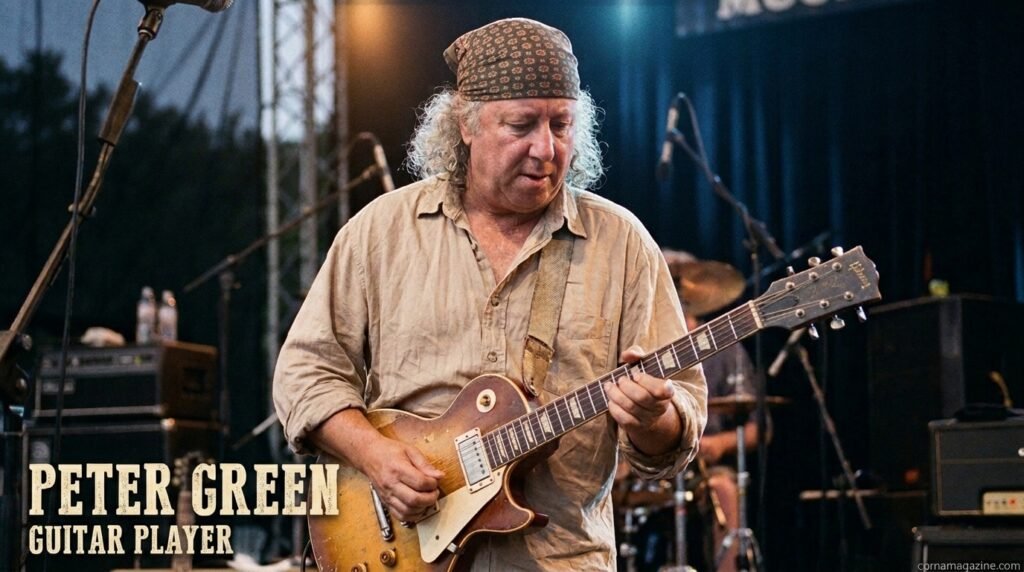
Green’s most famous instrument was a 1959 Gibson Les Paul Standard, later nicknamed “Greeny.” He acquired it in the mid-1960s. The guitar’s middle-position tone—nasal, cutting, and somewhat Strat-like while retaining Les Paul body and sustain—became central to his recorded sound on tracks such as “Black Magic Woman.”
The distinctive character came primarily from a reversed magnet in the neck pickup, creating a magnetically out-of-phase relationship when both pickups were selected. Accounts differ slightly on how this configuration arose (factory variation, repair work, or Green’s own adjustments after temporarily removing the neck pickup to emulate Clapton’s bridge-only approach), but the sonic result is clear on the classic recordings. Green later downplayed any special magic in the instrument itself, emphasizing the player’s role.
He used various amplifiers during the classic period, including Marshall combos and, later, Orange and Fender models. Reverb featured prominently in his sound; effects pedals were used sparingly. In later years he played other instruments, including Fender models and hollow-body guitars, and accumulated a large collection that was auctioned after his death.
Greeny itself passed to Gary Moore (who recorded the tribute album Blues for Greeny with it) and later to Kirk Hammett of Metallica. Gibson has issued replicas that attempt to capture its unique middle-position character.
Departure, Struggles, and Later Career
Green left Fleetwood Mac in 1970 amid growing discomfort with fame, money, and the effects of heavy LSD use. Mental health difficulties, later diagnosed as involving schizophrenia, intensified. He spent much of the 1970s and 1980s largely withdrawn from the music business, dealing with psychiatric treatment (including periods of electroconvulsive therapy) and holding various non-musical jobs at times. He released a highly experimental solo album, The End of the Game (1970), and later records such as In the Skies (1979), but sustained activity was limited for years.
In the mid-to-late 1990s Green returned with the Peter Green Splinter Group, aided by friends including Nigel Watson. The band released multiple albums between 1997 and 2003/2004, focusing largely on blues material (including Robert Johnson interpretations) and touring. Activity fluctuated; Green left the group around 2004. He made further appearances in later years with different line-ups under names such as Peter Green and Friends. In 1998 he was inducted into the Rock & Roll Hall of Fame as a member of Fleetwood Mac and performed “Black Magic Woman” with Carlos Santana at the ceremony.
A major tribute concert organized by Mick Fleetwood took place in February 2020 at the London Palladium, featuring many prominent musicians. Green died peacefully in his sleep on 25 July 2020 at age 73 while living on Canvey Island, Essex.
Legacy and Influence
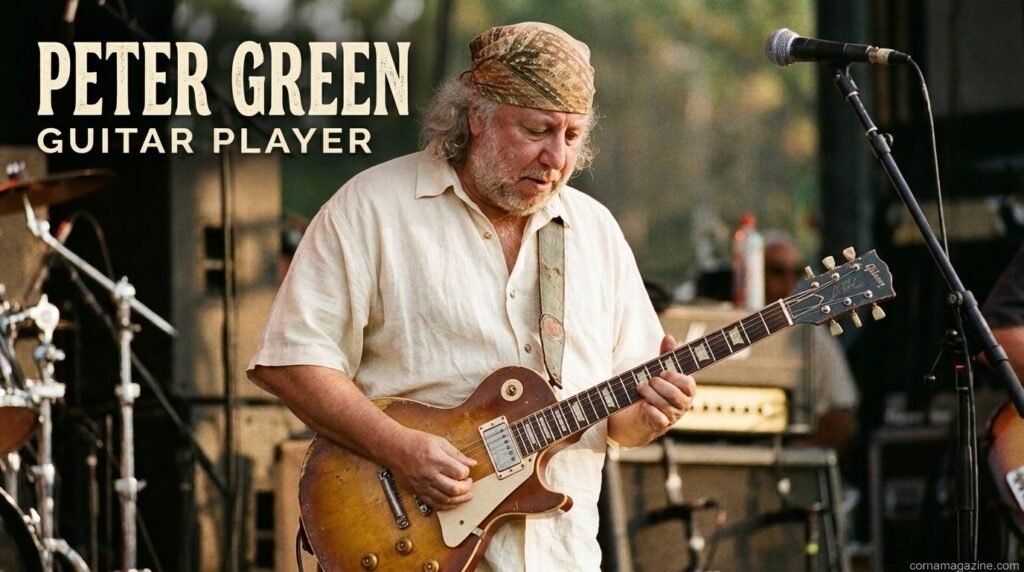
Peter Green’s recorded peak lasted only a few intense years, yet those recordings continue to reward close listening. His blend of blues authenticity, melodic invention, and emotional directness influenced players across styles. The early Fleetwood Mac catalogues remain essential listening for anyone interested in British blues-rock, and songs such as “Albatross” and “Black Magic Woman” reached audiences far beyond the original blues audience.
Guitarists still study his phrasing, vibrato, and use of space. The “Peter Green mod” (reversing the neck pickup magnet on a dual-humbucker guitar) remains a recognized tonal option for those seeking a similar middle-position character. More importantly, his example shows that technical skill serves expression: the notes that matter most are the ones that carry feeling.
For listeners new to his work, a practical starting path includes the Bluesbreakers track “The Supernatural,” the early Fleetwood Mac singles and albums, and selected Splinter Group material for a sense of his later playing. The live Boston Tea Party recordings capture the band at full strength.
Green never sought the myth-making that surrounded some of his peers. His music, however, continues to communicate with clarity and depth—exactly what a search for “Peter Green guitar player” ultimately seeks.
Frequently Asked Questions
When did Peter Green die?
He died on 25 July 2020 at the age of 73.
What guitar is Peter Green most associated with?
A 1959 Gibson Les Paul Standard known as “Greeny,” famous for its distinctive out-of-phase middle-position tone caused primarily by a reversed magnet in the neck pickup.
Why did Peter Green leave Fleetwood Mac?
He left in 1970 amid personal discomfort with success and the effects of drug use, followed by significant mental health challenges.
What are Peter Green’s best-known songs?
Key originals include “Albatross,” “Black Magic Woman,” “Oh Well,” “Man of the World,” and “The Green Manalishi.” “The Supernatural” from his Bluesbreakers period is also highly regarded.
Did Peter Green play after leaving Fleetwood Mac?
Yes. After a long period of limited activity, he recorded and toured extensively with the Peter Green Splinter Group from the late 1990s into the early 2000s and made further appearances later.
Peter Green’s story is one of exceptional talent, brief but brilliant commercial and artistic success, personal difficulty, and a lasting body of work that continues to move listeners. His playing remains a benchmark for expressive, economy-driven blues guitar.

1 Comment
Pingback: Arlee Sofa Couch Pet Dog Bed: Features, Sizes, Comfort & Buying Guide - cornamagazine.com