
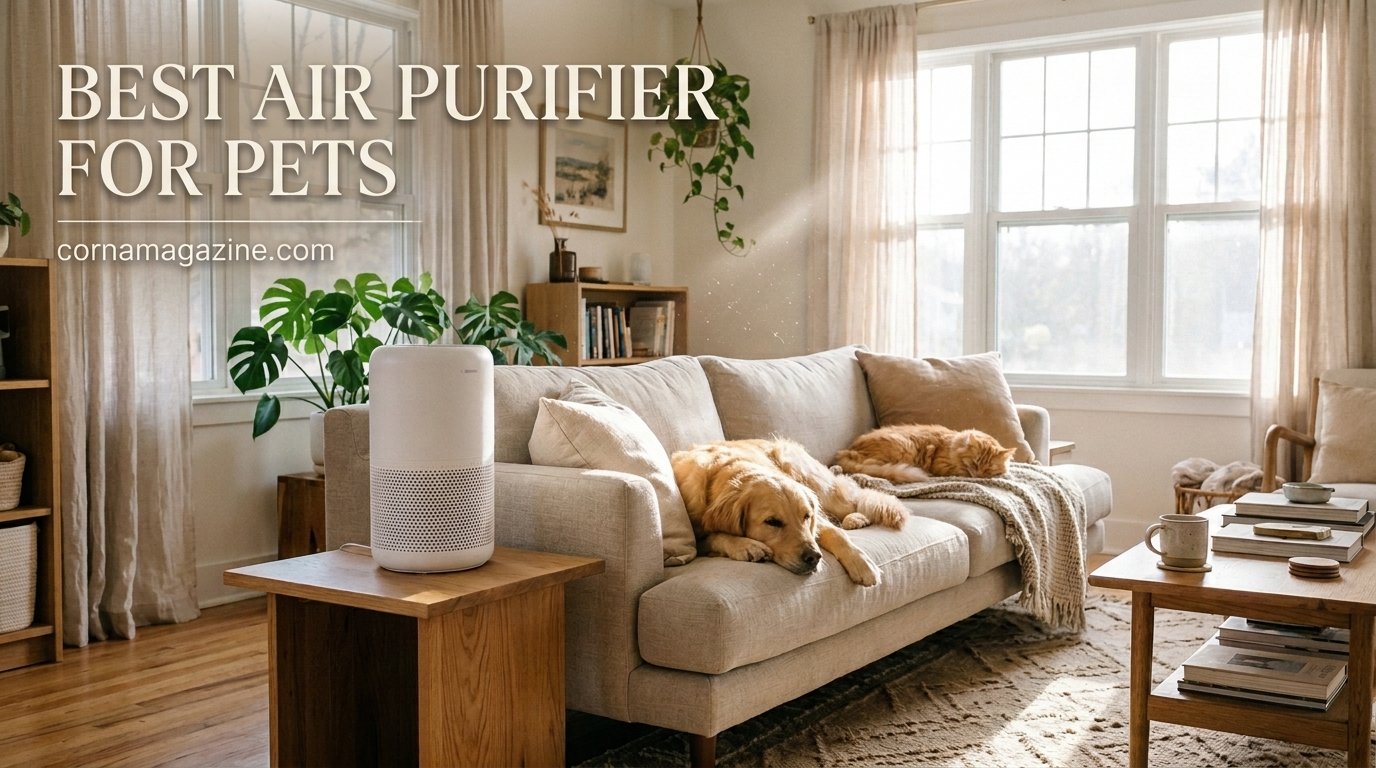
Pet owners deal with three distinct indoor air challenges: microscopic dander that stays airborne for hours, visible hair and fur that settles quickly, and odors from skin oils, saliva, urine, and litter. An air purifier can meaningfully reduce the airborne portion of these problems, but only if it matches the particles and gases involved. This guide explains how the right unit works, which features matter most, how to size it properly, and where expectations often go wrong.
Why Pet Air Quality Is Different
Pet dander consists of tiny skin flakes carrying proteins (such as Fel d 1 from cats or Can f 1 from dogs). These particles are light enough to remain suspended and circulate through a home long after a pet leaves the room. Hair and larger fur pieces fall to surfaces relatively fast. Odors come from volatile compounds that standard particle filters ignore.
A well-chosen air purifier targets the airborne fraction. It does not replace vacuuming, washing bedding, or managing litter boxes. Used together with regular cleaning, it can lower the overall allergen load and reduce lingering smells in the rooms where you spend the most time.
Core Features That Matter for Pets
True HEPA Filtration for Dander
Look for a true HEPA (or H13) filter rated to capture at least 99.97% of particles 0.3 microns and larger. Pet dander falls squarely in the size range these filters handle well. Some units claim finer performance; the practical difference for most homes is smaller than marketing suggests, provided the filter is genuine HEPA and the unit moves enough air.
Avoid vague “HEPA-type” or “HEPA-like” labels when possible. Independent verification or clear manufacturer specifications help confirm performance.
Washable Pre-Filter for Hair and Larger Debris
Hair and larger fur clog fine filters quickly. A separate washable mesh or fabric pre-filter catches much of this material before it reaches the HEPA stage. Rinsing the pre-filter every one to two weeks during heavy shedding seasons keeps airflow stronger and extends the life of the more expensive main filter.
Units without an accessible pre-filter force the HEPA to do double duty, which shortens filter life and raises operating costs in multi-pet or heavy-shedding homes.
Activated Carbon for Odors
Particle filters do not remove smells. Activated carbon adsorbs many odor-causing compounds. More carbon (and pelletized or thicker beds rather than thin sheets) generally performs better against litter-box ammonia, wet-dog smell, or general pet odor. Carbon saturates over time; heavier loads last longer before replacement is needed.
Some models offer optional pet-specific or higher-carbon filter packs. These can help in odor-heavy situations but add to long-term cost.
Clean Air Delivery Rate and Room Sizing
CADR measures how quickly a unit delivers clean air for specific particle sizes (smoke, dust, pollen). For allergy relief, aim for roughly four to five air changes per hour in the target room. A unit rated for a larger space at one air change per hour will underperform for continuous allergen control.
Match the CADR to the actual room volume rather than relying solely on manufacturer “up to X square feet” claims. Closed bedrooms or living rooms benefit most; open-plan areas usually need higher airflow or multiple units.
Noise, Sensors, and Extra Features
Quiet operation on low or sleep settings matters in bedrooms. Auto modes with particle sensors adjust fan speed when levels rise, which is useful during shedding or after vacuuming. App connectivity and filter-life indicators are convenient but secondary to filtration performance and ease of maintenance.
Avoid units that generate ozone as a primary cleaning method. Ozone is a lung irritant for people and especially risky for birds. Many ionizers or plasma features can be turned off; confirm this option if you keep sensitive pets.
Practical Considerations for Real Homes
Place the purifier in the room where people and pets spend the most time, or in the bedroom if allergies disrupt sleep. Keep it a short distance from walls and furniture so air can circulate. Running it continuously on a moderate setting usually works better than occasional high-speed bursts.
Maintenance is straightforward but non-negotiable. Clean the pre-filter regularly. Replace the HEPA and carbon according to the manufacturer’s schedule or sooner in heavy-use homes. Ignoring this reduces performance and can increase energy use as the motor works harder against clogged media.
Multiple smaller units often outperform one oversized unit in a multi-room home because air does not mix freely between closed spaces. Focus first on the highest-priority rooms.
Common Mistakes and Limitations
Many people expect an air purifier to eliminate all visible hair. It will not. Hair mostly settles; the pre-filter mainly protects the machine. Surface cleaning remains essential.
Odors from large litter boxes or heavily soiled areas may overwhelm modest carbon filters. Addressing the source (more frequent scooping, better litter, or improved ventilation) multiplies the benefit of the purifier.
Claims of “medical-grade” or “guaranteed allergy relief” should be viewed skeptically. Air purifiers reduce airborne allergens; symptom improvement varies by individual sensitivity, overall home cleanliness, and other factors. They are a helpful tool, not a complete solution.
Filter costs over two or three years often exceed the purchase price of the unit itself. Factor replacement expense into the decision, especially if you have multiple heavy shedders.
Frequently Asked Questions
Do air purifiers help with pet allergies?
They reduce airborne dander and other particles when equipped with true HEPA filtration and run in the right rooms. Results depend on consistent use, proper sizing, and complementary cleaning. They do not remove allergens already settled on surfaces.
Can an air purifier remove pet hair?
Only the small amount that remains airborne near the unit. Most hair settles and requires vacuuming or other surface cleaning. The pre-filter’s main job is protecting the HEPA, not clearing the whole room of fur.
Are air purifiers safe around pets?
True HEPA and carbon models without ozone generation are generally considered safe for cats and dogs. Birds are more sensitive to airborne irritants; stick to non-ionizing, non-ozone units and ensure good overall ventilation.
How often should filters be changed in a pet home?
Follow the manufacturer’s guidance, then adjust based on visible loading and performance. Heavy shedding or multiple pets often shortens intervals. Washable pre-filters should be cleaned far more frequently than the main filter is replaced.
Is a more expensive unit always better for pets?
Not necessarily. Higher CADR, thicker carbon, and easier pre-filter access matter more than brand prestige or extra smart features. A well-matched mid-range unit with good maintenance often outperforms a poorly sized premium model.
Choosing and Using One Effectively
Start with the rooms that matter most and the specific problems you notice most (dander symptoms, odor, or both). Prioritize true HEPA, a washable pre-filter, adequate CADR for the space, and sufficient carbon for your odor load. Check independent test data where available for measured particle removal rates and noise levels.
Once installed, treat the purifier as one part of a broader routine: regular vacuuming with a HEPA vacuum, frequent washing of pet bedding, and source control for odors. Monitor how the air feels and how filters load over the first weeks, then adjust placement or settings as needed.

1 Comment
Pingback: How to Remove Pet Hair from Carpet: Practical Methods That Work - cornamagazine.com