
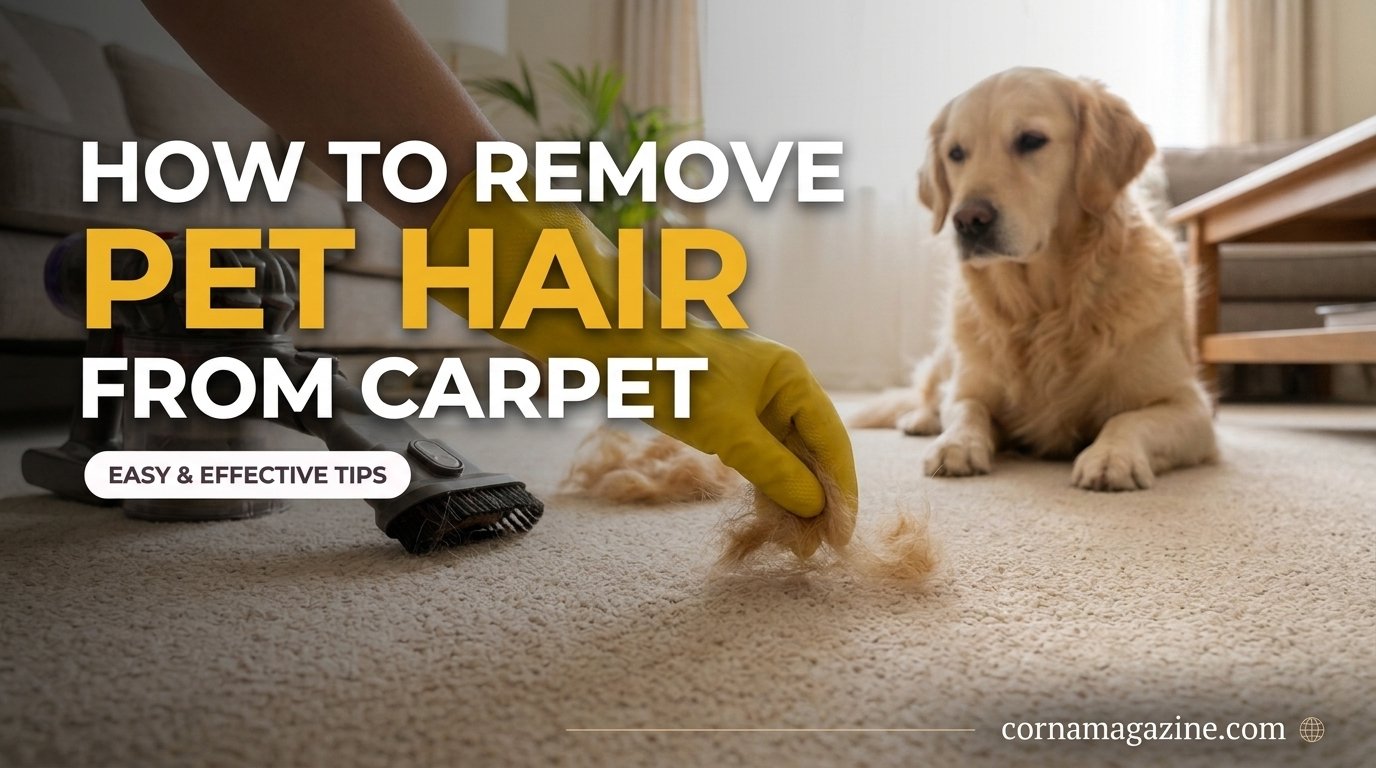
Pet hair embeds deep into carpet fibers. It clings with static, traps dirt, and can trigger allergies or make rooms look unkempt. Removing it thoroughly takes more than a quick pass with a regular vacuum. The right combination of tools, technique, and timing makes a clear difference.
This guide covers proven methods that work on most common carpet types, what tools actually help, how to handle different situations, and how to reduce the amount of hair that ends up in the carpet in the first place.
Why Pet Hair Is Hard to Remove
Carpet piles create pockets where loose hair settles and locks in. Static electricity makes the hair stick tighter. High-traffic areas and rooms where pets rest collect the most. Short hair (from dogs like Labs or short-haired cats) often sinks deeper and is harder to lift than longer strands that stay near the surface.
Regular vacuuming alone usually leaves a visible layer behind because standard brush rolls push some hair deeper instead of lifting it. Effective removal needs friction, static disruption, or specialized suction.
Tools and Supplies That Actually Help
You do not need expensive equipment. These items are widely available and repeatedly useful:
- A vacuum with strong suction and a motorized brush roll or dedicated pet-hair attachment. Look for models designed for pet hair if you vacuum frequently.
- Rubber gloves (the dishwashing kind) or a rubber squeegee.
- A damp microfiber cloth or sponge.
- Lint rollers or packing tape for small areas and upholstery edges.
- A soft-bristle brush or carpet rake for longer pile.
- Baking soda (optional, for odor and light deodorizing after hair removal).
Avoid using excessive water on carpet. Moisture can drive hair deeper or encourage mold in the pad underneath.
Step-by-Step Methods to Remove Pet Hair
1. Vacuum Thoroughly First
Start with the vacuum. Use slow, overlapping passes in multiple directions. Go against the pile direction first, then with it. Empty the canister or change the bag when it is half full so suction stays strong. Focus extra time on areas under furniture, near pet beds, and high-traffic paths.
If your vacuum has a pet-hair or turbo brush attachment, use it. These often feature rubber or silicone elements that grab hair better than standard bristles.
2. Use Rubber Gloves or a Rubber Squeegee
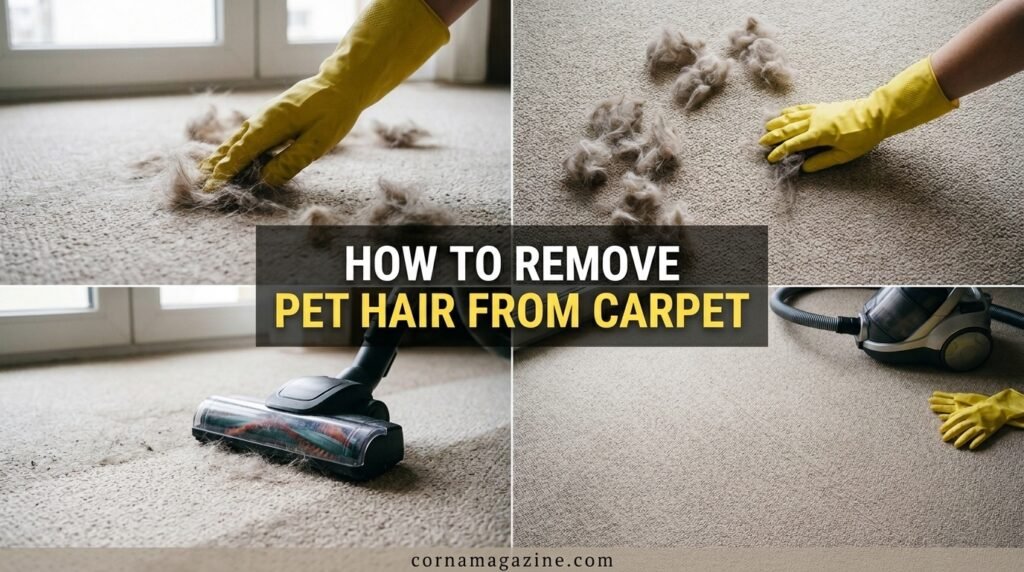
Put on slightly damp rubber gloves. Rub your hands across the carpet in firm, sweeping motions. The rubber creates friction and static that pulls hair into clumps. Gather the clumps and discard them. Repeat until less hair appears.
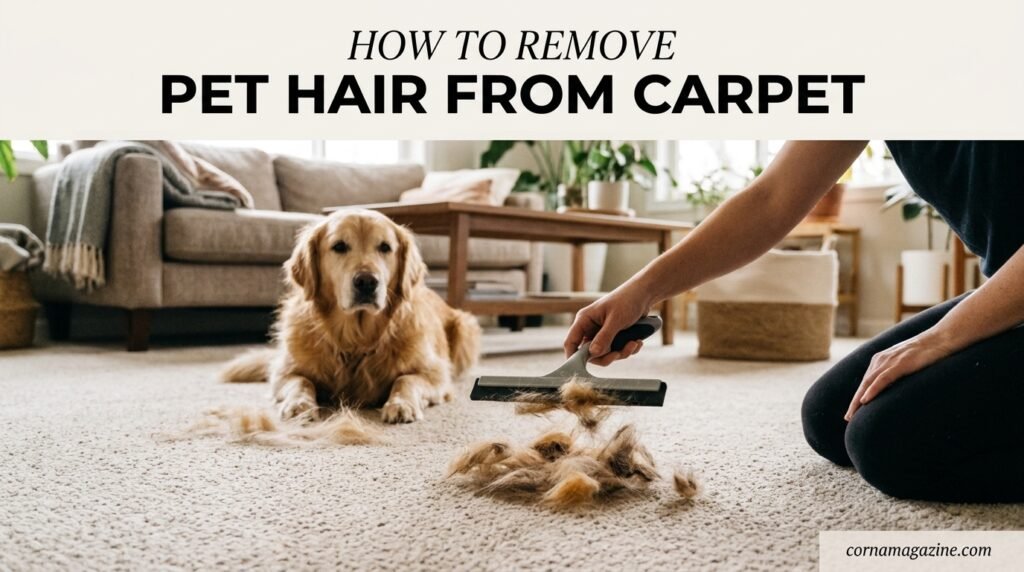
A rubber window squeegee works the same way. Drag it across the surface in one direction. Hair collects along the blade edge. This method is especially effective on low- to medium-pile carpets and costs almost nothing.
3. Damp Cloth or Microfiber Method
Lightly dampen a microfiber cloth (not soaking wet). Wipe in short strokes. The moisture and fabric texture lift surface hair. Rinse the cloth frequently so you do not redistribute hair. This works well for touch-ups and smaller rooms.
4. Lint Rollers and Tape for Edges and Stairs
For stairs, baseboards, and furniture edges where vacuum heads cannot reach easily, use a lint roller or wrap packing tape around your hand (sticky side out). Press and lift. Replace the sticky surface often.
5. Carpet Rake or Soft Brush for Thick Pile
On longer or denser pile, a carpet rake or soft-bristle brush can lift hair from deeper layers before vacuuming. Work in sections and follow immediately with the vacuum so loosened hair does not settle again.
Handling Different Carpet Types
- Low-pile or commercial-style carpets respond well to rubber tools and strong vacuuming.
- Medium-pile residential carpets benefit from the combination of vacuum + rubber glove method.
- High-pile or shag carpets require more patience. Hair sinks farther. Use a rake first, then vacuum slowly. Avoid aggressive scrubbing that can damage fibers.
- Berber or looped carpets can snag if you use sharp tools. Stick to rubber and suction methods.
Always test any new tool on a small, hidden area if the carpet is delicate or has a warranty that restricts certain cleaning approaches.
Prevention: Reduce How Much Hair Reaches the Carpet
Removal is easier when less hair accumulates.
- Brush or comb pets regularly, preferably outdoors or over a surface that is easy to clean.
- Use washable covers or throws on furniture where pets rest, then shake them outside.
- Place washable rugs or mats in favorite pet spots and near entryways.
- Consider a quality air purifier with a good filter if shedding is heavy; it reduces airborne hair that eventually settles.
- Vacuum more frequently in high-shed seasons rather than waiting for visible buildup.
- Keep nails trimmed; longer nails can pull and spread hair during play.
Some owners use pet-specific diet or supplements that may support coat health, but results vary by animal and should be discussed with a veterinarian rather than treated as a guaranteed fix.
Common Mistakes to Avoid
- Relying only on a standard upright vacuum without attachments or multiple passes.
- Using too much water or carpet shampoo before the bulk of the hair is removed. Wet hair becomes harder to extract and can mat.
- Scrubbing aggressively with stiff brushes that damage fibers or push hair deeper.
- Ignoring the underside of area rugs or the edges where walls meet carpet.
- Waiting until hair is heavily matted. Light, frequent sessions are more effective than occasional deep cleans.
When Professional Help Makes Sense
If the carpet has years of embedded hair, odors, or stains mixed with dander, a professional carpet cleaner with pet-hair experience can extract more than home methods. They often use truck-mounted extraction equipment with stronger suction and specialized tools. Ask what methods they use and whether they guarantee removal of loose hair.
For most households, consistent home methods keep carpets manageable without frequent professional visits.
Frequently Asked Questions
Does baking soda remove pet hair?
No. Baking soda is useful for absorbing odors after hair is removed. Sprinkle it, let it sit, then vacuum thoroughly. It does not lift hair on its own.
Will a steam cleaner get rid of pet hair?
Steam can loosen some surface hair and kill certain allergens, but it is not the most efficient first step for hair removal. Remove as much dry hair as possible first so the steam does not drive remaining strands deeper.
How often should I clean pet hair from carpet?
It depends on the pet’s shedding level and the number of animals. Many people find that a thorough session once or twice a week plus quick touch-ups keeps things under control. Heavy shedders may need more frequent attention in certain seasons.
Can I use a clothes dryer sheet?
Some people report that rubbing a dryer sheet lightly can reduce static and make hair easier to vacuum. Results are mixed and temporary. It is not a primary method.
Is there a permanent solution?
No single product or technique eliminates the need for ongoing maintenance while you have shedding pets. The goal is effective, repeatable removal and good prevention habits.
Final Tips for Better Results
Work in good lighting so you can see remaining hair. Clean one room or section completely before moving on. Empty vacuum canisters outdoors when possible to avoid redistributing hair indoors. After major cleaning, run a final vacuum pass the next day; some loosened hair will rise to the surface overnight.
Consistent technique matters more than any single “miracle” tool. Rubber friction methods combined with strong suction consistently outperform vacuuming alone for most carpets. Adjust the approach based on your specific carpet pile and the amount of hair your pets produce, and the process becomes straightforward rather than frustrating.

2 Comments
Pingback: Majestic Pet Aruba Super Value Dog Bed: Features, Sizes & Buying Guide - cornamagazine.com
Pingback: Peter Piper Picked a Peck of Pickled Peppers: Full Rhyme, Origin, and Meaning - cornamagazine.com