
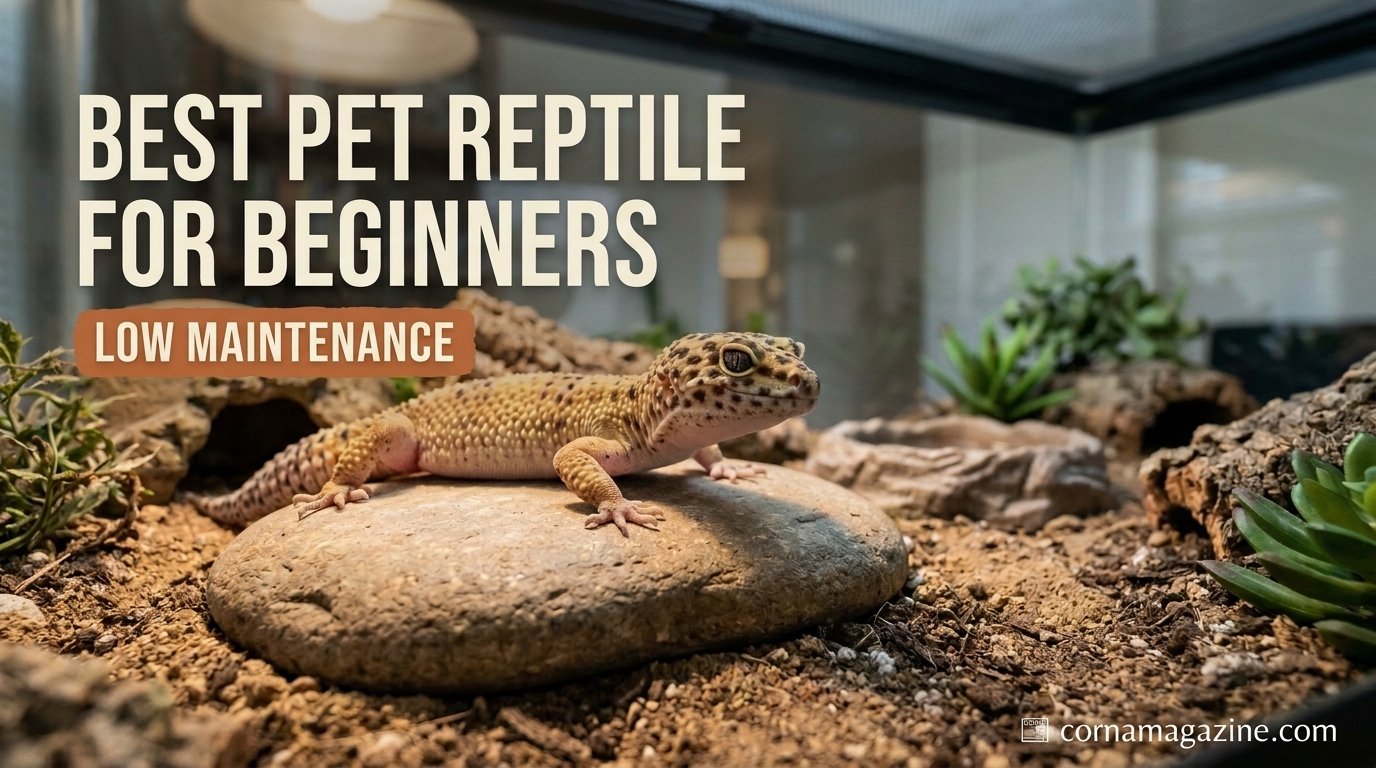
If you are searching for the best pet reptile for beginners with low maintenance needs, you want a hardy species that is forgiving of minor mistakes, does not demand complex daily routines, and has well-documented care requirements. No reptile is truly “set and forget.” Even the simplest species need a properly heated enclosure, consistent feeding, clean water, observation, and occasional deeper cleaning. Relative to more demanding lizards or snakes, however, a few species stand out for simpler setups, reliable feeding responses, and lower risk of serious problems when basic husbandry is followed.
This guide focuses on those more approachable options. It explains what low-maintenance care actually involves, compares the strongest beginner candidates, and highlights the practical trade-offs so you can choose based on your space, comfort with insects or rodents, and willingness for a multi-year commitment.
What Low-Maintenance Really Means for Reptiles
Reptiles do not need walks, litter boxes, or constant attention the way dogs and cats often do. Their care is largely environmental. Once the enclosure is set up correctly with temperature gradients, appropriate humidity, hides, and a secure lid, daily tasks are usually limited to checking temperatures, offering food on schedule, refreshing water, and watching for signs of trouble (appetite changes, incomplete sheds, lethargy, or weight loss).
Lower-maintenance species tend to share these traits:
- Relatively small adult size or modest space needs
- Forgiving temperature and humidity ranges (or simple ways to meet them)
- Reliable feeding on readily available food
- Docile or at least predictable temperament
- Widely available captive-bred animals and care information
- Lifespans that are long but not extreme (typically 10–20+ years)
Even these animals still require an initial investment in a quality enclosure, thermostat-controlled heat, thermometers, and a plan for specialist veterinary care if problems arise. “Low maintenance” is relative—never absolute.
Top Low-Maintenance Beginner Reptiles
Leopard Gecko (Eublepharis macularius)
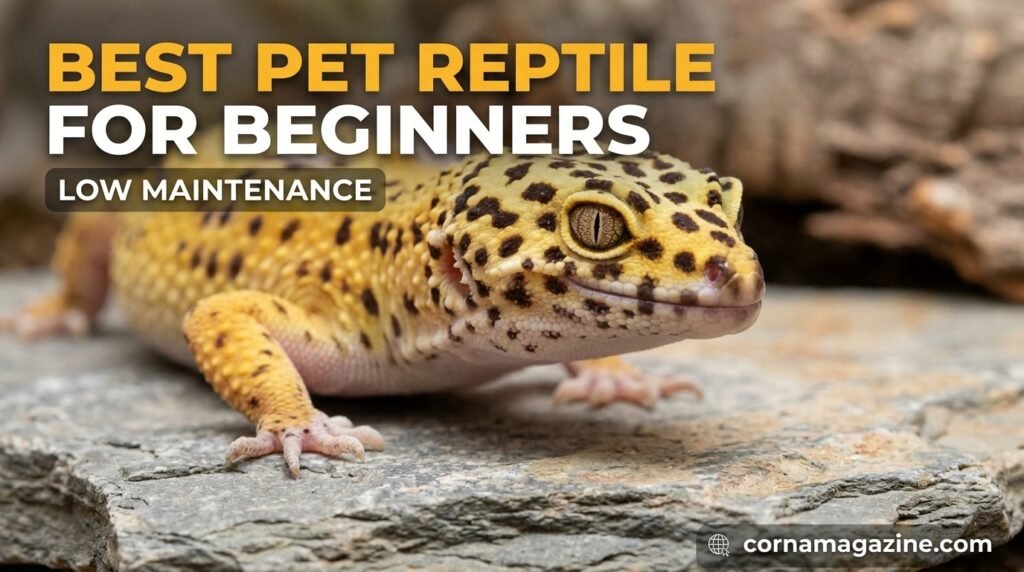
Leopard geckos are frequently recommended as one of the strongest overall choices for first-time keepers. Adults reach about 7–10 inches. They are ground-dwelling and crepuscular (most active at dawn and dusk), so many people see them when they are home in the evening.
They need a temperature gradient with a warm-side surface temperature around 88–92°F and a cooler side in the mid-70s°F. A thermostat-controlled under-tank heat mat or low-wattage overhead heat source works well. Ambient humidity stays relatively low (often 30–40%), but a humid hide with damp moss is essential for healthy shedding. Low-level UVB is increasingly considered beneficial though not strictly required when calcium supplementation is consistent.
Diet is live insects (crickets, dubia roaches, black soldier fly larvae, and occasional mealworms), dusted with calcium and multivitamin supplements on a schedule. Juveniles eat more frequently; adults usually every 2–3 days. They are solitary and should not be housed together.
Strengths for beginners: Manageable size, relatively simple dry setup, good handling tolerance once settled, and abundant care information.
Limitations: Live insects are non-negotiable for most keepers. Enclosure size recommendations have increased over time—many sources now prefer a 36 × 18-inch footprint or larger for an adult rather than a minimal 20-gallon tank.
Crested Gecko (Correlophus ciliatus)
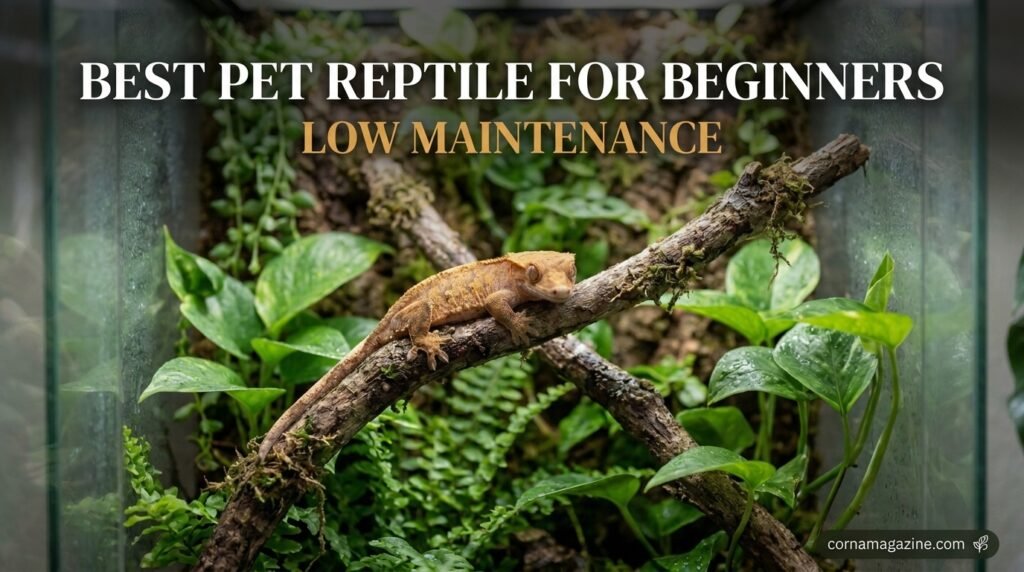
Crested geckos often rank as the lowest day-to-day maintenance option among popular lizards. Adults reach roughly 7–9 inches including the tail. They are arboreal, so they need a taller enclosure (commonly a minimum 18 × 18 × 24 inches for an adult) with climbing branches and foliage.
In most homes they thrive at ordinary room temperatures of about 72–78°F and do not require supplemental heat. They need moderate humidity, usually achieved with evening misting so that humidity rises overnight and drops during the day. Commercial powdered diets mixed with water form the staple; live insects can be offered occasionally for enrichment.
They can jump and may drop their tails if stressed (the tail does not regenerate). Handling is possible but they are generally more flighty than leopard geckos.
Strengths for beginners: No live-insect requirement as the main diet, often no heating equipment needed, and straightforward powdered food.
Limitations: Requires consistent humidity management and a vertical space. Tail loss is permanent.
Corn Snake (Pantherophis guttatus)
For those comfortable with snakes, corn snakes are among the most recommended beginner species. Adults typically reach 3–5 feet. They are calm, feed reliably on frozen-thawed mice of appropriate size, and tolerate handling well once established.
They need a secure enclosure with a temperature gradient (warm side roughly 85–90°F, cooler side lower), hides, and a water dish large enough for soaking if desired. Humidity is moderate and not as exacting as for some tropical snakes. Adult enclosures are larger than those for the small geckos—often approaching 4 feet in length.
Strengths for beginners: Excellent feeding response, docile temperament, and relatively straightforward care compared with more humidity-sensitive snakes.
Limitations: Larger adult size and the need to handle and store frozen rodents. Secure lids are essential because they are capable escape artists.
Other Notable Mentions
African fat-tailed geckos have care similar to leopard geckos and can be a solid alternative. Ball pythons are popular and usually calm but can be more sensitive to humidity and occasionally refuse food for extended periods, which worries many beginners. Bearded dragons are highly interactive and active during the day, yet they require stronger UVB lighting, larger enclosures, and a more varied diet of insects plus greens, making them higher-maintenance overall.
Tortoises and aquatic turtles generally demand more space, specialized diets, or water-quality management and are less ideal as first “low-maintenance” reptiles for most people.
Key Factors When Choosing
Space and enclosure shape. Leopard geckos need floor space. Crested geckos need height. Snakes need length and secure locking lids.
Feeding comfort. If you prefer not to keep live insects, a crested gecko’s powdered diet is simpler. If frozen rodents feel more straightforward than insect colonies, a corn snake may suit you better.
Handling expectations. Leopard geckos and corn snakes generally accept regular, gentle handling more readily than crested geckos.
Time commitment and lifespan. All of these animals commonly live 15–20 years (sometimes longer with excellent care). This is a long-term responsibility, not a short-term experiment.
Veterinary access. Find an exotic-animal veterinarian before problems arise. Routine checks and emergency care differ from dog and cat medicine.
Cost of ownership. Initial setup (enclosure, heat, thermostats, hides, substrate or décor) is the largest expense. Ongoing costs are mainly food, electricity for heat, and occasional substrate or supplement replacement.
Common Beginner Mistakes to Avoid
- Buying the animal before the enclosure is fully set up and temperatures are stable and verified with accurate thermometers.
- Using unsafe substrates (loose sand for young or stressed animals can cause impaction) or inadequate hides.
- Skipping a thermostat on any heat source.
- Housing multiple animals together without understanding species-specific aggression or stress risks (most of these species do best alone).
- Underestimating adult space needs or the length of the commitment.
- Relying only on pet-store advice without cross-checking current care standards.
Realistic Daily and Weekly Routine
A well-set-up leopard gecko or crested gecko typically requires a few minutes of daily observation and water checks, feeding several times per week, and weekly spot-cleaning plus a deeper clean on a regular schedule. Snakes often eat less frequently (every 7–14 days once adult) but still need daily visual checks and secure housing.
The biggest ongoing effort is consistency—maintaining the correct temperatures and humidity ranges and responding promptly if the animal stops eating or shows signs of illness.
Frequently Asked Questions
What is the single easiest reptile for a complete beginner?
Leopard geckos and crested geckos are the two most frequently cited low-complexity lizards. The better choice depends on whether you prefer a ground-dwelling insectivore that handles well or an arboreal species that can live primarily on powdered food at room temperature.
Are any reptiles truly low-maintenance like a goldfish?
No. Even the simplest reptiles need controlled heat, proper nutrition, and monitoring. They are lower-maintenance than many other reptiles and than some mammals, but they are not passive ornaments.
Do I need UVB lighting?
For leopard geckos and crested geckos, low-level UVB is increasingly viewed as beneficial for overall health even if older care sheets listed it as optional. Bearded dragons require strong UVB. Snakes generally need less or none, depending on species and husbandry.
Can children handle these animals?
Adult supervision is required. Gentle, short handling sessions are possible with leopard geckos and corn snakes once the animal is settled, but reptiles are not interactive playmates and can be stressed by frequent or rough handling.
How long will the pet live?
Expect 15–20 years for leopard geckos, crested geckos, and corn snakes with good care. This is a multi-year (often multi-decade) commitment.
Final Thoughts
The best pet reptile for beginners seeking low maintenance is the one whose needs match your living situation, schedule, and comfort level. Leopard geckos offer a classic, well-documented starting point with good handling potential. Crested geckos reduce some of the heating and insect-keeping demands. Corn snakes provide an accessible entry into snake keeping for those ready for a larger animal and frozen prey.
Research the specific species thoroughly, set up the enclosure completely before bringing the animal home, source captive-bred animals from reputable keepers when possible, and plan for the full lifespan. When the basics are done correctly, these reptiles can be rewarding, relatively straightforward companions that teach careful observation and consistent care.
